

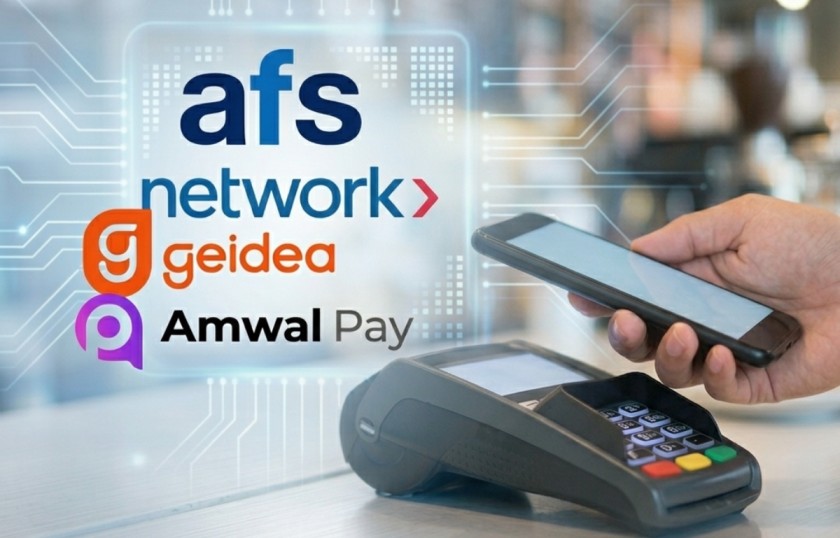
From Bahrain and the UAE to Saudi Arabia and Oman, how Gulf payment companies have helped build the merchant acquiring, POS, and payment gateway ecosystems that support today’s digital economy.
Over the past decades, the Gulf Cooperation Council (GCC) has experienced significant growth in digital payments, driven by economic expansion, e-commerce adoption, and the region’s ongoing transition toward digital economies.
While consumers interact daily with POS terminals and online payment gateways, the underlying ecosystem is powered by merchant acquiring services, payment gateways, merchant management platforms, terminal management systems, settlement capabilities, and risk management solutions.
As the industry evolved, each GCC country developed its own model, supported by companies that played an important role in building payment infrastructure.
Bahrain (AFS)
Bahrain was among the first Gulf countries to invest in payment infrastructure and digital financial services, leveraging its position as a regional financial hub.
One of the leading companies in this sector is AFS, founded in 1984. The company provides merchant acquiring services, POS solutions, payment gateways, merchant management platforms, and settlement and operational services for financial institutions and merchants.
Over the years, AFS has contributed to the development of payment infrastructure within Bahrain and across several neighboring Gulf markets, making it one of the region’s most established payment technology companies.
United Arab Emirates (Network International)
The UAE leveraged its position as a global financial and commercial center to build payment companies that expanded beyond domestic borders into regional and international markets.
One of the leading companies in this space is Network International, founded in 1994. The company offers merchant acquiring services, POS solutions, payment gateways, merchant management platforms, and settlement and operational services for financial institutions, businesses, and merchants.
Through its regional and international expansion, Network International has become one of the largest payment technology companies in the Middle East and Africa, playing a significant role in the development of payment infrastructure across multiple markets.
Saudi Arabia (Geidea)
Saudi Arabia has experienced one of the fastest digital payment transformations in the region, supported by Vision 2030 and broader digital transformation initiatives.
One of the leading companies in this sector is Geidea, founded in 2008. The company provides merchant acquiring services, POS solutions, payment gateways, merchant management platforms, e-commerce solutions, and digital payment services for financial institutions and merchants.
The rapid growth of electronic payments in the Kingdom has strengthened Geidea’s position as one of the country’s leading payment and merchant acquiring providers.
Oman (AmwalPay)
Oman has witnessed notable growth in its fintech sector in recent years, supported by digital transformation initiatives and the modernization of financial services.
One of the leading companies in this sector is AmwalPay, founded in 2021. The company provides merchant acquiring services, payment gateways, POS solutions, merchant management platforms, terminal management systems, settlement services, and risk management capabilities for financial institutions, banks, and merchants.
The emergence of companies such as AmwalPay reflects the continued development of Oman’s fintech ecosystem and the growing focus on building locally developed payment solutions that support the country’s digital economy.
The Future of Gulf Payments
Although GCC markets differ in size and maturity, they share a common objective: building modern payment infrastructure that supports digital commerce and financial innovation.
As e-commerce and digital financial services continue to expand, payment companies and merchant acquiring providers are expected to play an increasingly important role in shaping the future of payments across the region and strengthening the Gulf’s position as a growing hub for financial and technology.
